About
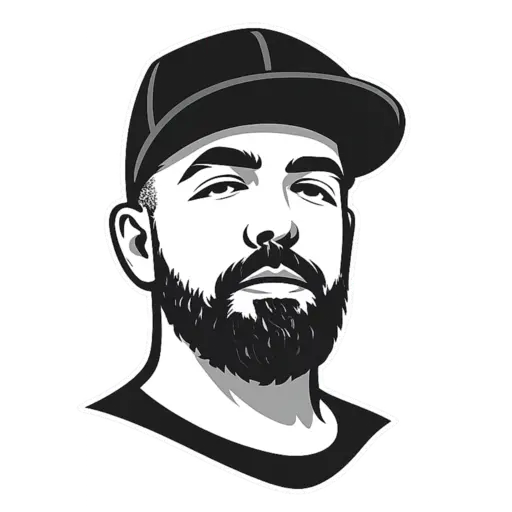
Hey, I'm Anthony.
I'm the founder of Control OS and the researcher behind The Law of Instrumental Integrity. My work spans research, development, operations, and marketing—whatever it takes to solve hard problems where failure has real consequences. I do this because I understand firsthand what happens when critical systems fail.
Origin
The chaos years
I didn't grow up thinking I'd be doing R&D.
I grew up hating school and being terrible at it. Then I spent years trying to become what I thought I was supposed to be—stable, respectable, someone who looked like they had it together. In the process, I lost what made me myself. When that version collapsed, I hit lows that taught me what resilience actually means. Not the motivational poster version. The kind you only learn when everything falls apart and you have to rebuild from nothing. That experience changed how I see everything. I stopped trusting fragile systems. I stopped believing in solutions that can't survive pressure. Now I build things designed to hold—because I've lived what happens when they don't.
Past
The years that shaped me
There are chapters of my life where I had to rebuild from nothing. More than once. That experience doesn't make you enlightened. It makes you practical. It makes you pay attention to what actually works when you're tired, stressed, and one bad week away from a spiral.
Rebuilding is both liberating and humiliating
When you start from zero, you have complete freedom to choose what's next. You also have endless time to think about what went wrong. That combination teaches you things comfort never could.
We diagnose symptoms, not causes
Most failures get blamed on vague forces beyond our control. The truth is harder: most collapses were preventable. We just prefer existential explanations over admitting we missed the warning signs.
Pattern recognition became a framework
I started seeing the same failure pattern everywhere—in relationships, organizations, empires, AI systems. Eventually I formalized it into The Law of Instrumental Integrity: a way to predict system degradation before it happens.
Now I chase problems I can't solve
The biggest shift was learning to seek discomfort. To deliberately tackle problems my rational mind says are beyond me. Rebuilding taught me that your perceived limits aren't real boundaries.
Instinct
I learn by taking things apart
When something isn't working, I don't want a hack or a workaround. I want to understand the machinery. I want to know why it failed, what assumption got violated, and how to redesign the system so it stops failing in that exact way.
This isn't some noble intellectual curiosity. It's closer to compulsion. If I don't understand why something broke, I can't trust that it won't break again. And I really hate things breaking twice for the same reason.
That instinct shows up everywhere. In code, I'm not satisfied until I know what the machine is actually doing under the hood. In relationships, I need to understand the underlying dynamic, not just smooth over the conflict. In systems—whether it's a business process or a personal habit—I want to see the gears, find the weak points, and rebuild it so it can handle more pressure next time.
Most people stop at "it works now." I can't. I need to know if it'll still work when things get hard.
Work
How I became cross-functional by accident
Over the last decade I worked across research, marketing, engineering, and operations. Not because I planned a career mosaic, but because I kept ending up in rooms where the problem was bigger than one job title.
When nobody could bridge the gaps, I became the bridge. Early on, this was actually a liability—I kind of sucked at all of them. But each discipline taught me something I couldn't have learned anywhere else.
Marketing taught me people
Marketing taught me how people actually work. What they fear, what they hope for, what they say out loud, what they never admit, and what they'll actually do when they're under pressure. It's pattern recognition for human behavior at scale.
Engineering taught me integrity
Code doesn't care how confident you sound. It either works or it doesn't. That kind of blunt, immediate feedback rewires your brain in a good way. You learn to stop bullshitting yourself real fast.
Research taught me humility
Research showed me how small and unimportant I am in the grand scheme of the world's past, present, and future. It quantified my achievements against the great works of those who came before me.
Operations taught me consequences
In ops you learn that "almost works" is still broken, and broken has a cost. Usually paid by someone who didn't design the system. You stop thinking in abstractions and start thinking about who deals with your failures.
Motivation
The part people don't see
When you grow up in a state of dysfunction, you learn fast that nobody's coming to save you. You either figure shit out or you drown in someone else's mess. That doesn't go away. It becomes your default setting. Self-reliance stops being a choice and becomes the only thing you trust.
That turned me into a serial solopreneur, and it cost me. Real ambitious work needs other people, resources, and some basic faith that support actually exists. I didn't have any of that. So when things went wrong (and they went wrong a lot) there was nobody else to point at. Just me, the wreckage, and the uncomfortable question of what I did to cause it.
The failures were the kind that make you want to crawl under a rock. You start seeing how fast a clear mission turns into an emotional reaction. How easy it is to mistake your justifications for actual reasons. How momentum overrides good judgment when you're exhausted and desperate.
But fail enough times and you start seeing patterns. The same structural problems kept showing up in my life, in the world around me, in the systems I was trying to build. Eventually I formalized it into the Law of Instrumental Integrity: a framework that describes how any purpose-driven system stays viable or falls apart. Actions chosen by criteria. Criteria consistent with the objective. Both respecting the boundaries the objective implies. And actions never becoming their own justification.
That understanding changed everything. It transformed helplessness into surgical precision. When something breaks, I can trace it back. Which relationship degraded? Where did it detach? What constraint got violated? That clarity is what drives me now. I can see the root causes and the levers that might actually fix them. I understand what happens when systems collapse at scale. So I'm not just trying to avoid my own failures anymore. I'm building to prevent the ones that actually matter.
Personality
If we met IRL
You'd clock a few things quickly. I'm friendly, but I'm not small talk and vibes for very long. My brain defaults to systems, patterns, and wait, why is it like that. I'll get excited about a tiny detail, then immediately zoom out into meaning, incentives, and the long term consequences. I can be intense, opinionated, and strangely calm in the same hour. The upside is I build real things. The downside is I sometimes treat life like a project that needs a patch. You'll know which one you're getting within five minutes.
I go full gremlin mode
When something grabs me, I disappear into it. Deep focus, tunnel vision, beard trims forgotten, texts ignored. I'll chase one idea down ten rabbit holes and come back with a plan, a prototype, and thirty notes. It's productive… until it's not. I'm learning to resurface on purpose instead of only when my brain runs out of fuel.
I'm stubborn by default
I've always had a hard headed streak. If I believe in something, I'll push through friction like it's a personal insult. That grit is why I've survived a lot and built a lot. It's also why I sometimes waste time trying to willpower a problem that needs a different approach. I'm working on swapping stubbornness for precision.
I overbuild everything
I can't help it, I see the future version of the problem. So I add the extra support beam, the edge cases, the what if this scales thinking. It makes what I build feel sturdy and trustworthy. It also means I have to wrestle the part of me that thinks good enough is a moral failure. Shipping is a skill I practice on purpose.
I'm detoxing from fake polish
I never liked the performative confidence, I just learned it because it seemed like the entry fee. Play the part, say the right words, act like you're certain. Lately I've been shedding that skin. I'd rather be clear than impressive, honest than smooth, real than brand safe. The tradeoff is you get me, not the performance.
I think in long loops
This one is newer. I used to chase outcomes. Now I'm obsessed with consequences. I'm always asking: does this compound, does it decay, does it trap people later. I'm drawn to work that holds up over time, even if it's slower to build. The downside is my brain can go infinite and forget that today still exists. I'm learning to land the plane.
I'm intense but grounded
I'll come on strong when I care. I'll talk fast, think faster, and argue my point like it's court. Then I'll suddenly get quiet and listen like I'm taking mental notes for later. I'm not moody, I'm processing. If I trust you, you'll get both versions. And if I don't, you'll get polite distance and a quick exit.
Writing
Why and how I write
I don’t write because I love writing. I write because the mission requires it.
If I had my way, I’d spend 100% of my time building and researching. That’s the honest truth. But Control OS doesn’t get to exist in a vacuum. If I’m serious about unf#cking modern software, I have to communicate with the outside world: the people supporting the work, and the people the work is meant to support. Updates aren’t a vibe. They’re part of the job.
So here’s the disclosure: most of what you read starts as voice note brain dumps, messy shorthand, and mind maps. Then AI helps me turn that raw material into something palatable. The ideas are mine. The direction is mine. I always do the final cut. But without some automation to parse, organize, and edit, you’d either get no updates at all… or you’d get the painful, ineffective version where I try to brute force writing after 16 hours of dev.
This site is my public logbook: what I’m building, what I’m learning, what’s changing, and what still needs to be done.
Content
What you’ll find here
Think of this site as my running field manual. Not a highlight reel. Not thought leadership. More like: what I’m noticing, what I’m building, what I’m learning the hard way, and what I’m refining in public.
You’ll get real updates, rough edges included. You’ll also see a big thread running through everything: the Law of Instrumental Integrity. I’ll be publishing case studies, practical applications, and open challenges where I invite people to try to find exceptions or disprove it.
Diary entries
The real-time version of my life and work. What’s happening, what I’m wrestling with, and the parts that don’t make good marketing. Sometimes messy. Sometimes surprisingly clear. Always real.
Build notes
Behind-the-scenes progress on what I’m making. The tradeoffs, the mistakes, the pivots, the this seemed smart yesterday moments, and the lessons I’m collecting so you don’t have to repeat them.
Field notes
Observations from the trenches. Habits, culture, tools, learning, resilience, and the quiet ways modern life bends people over time. Less announcing, more noticing. Stuff I’d tell a friend.
Instrumental Integrity
Deep dives into the Law of Instrumental Integrity. Case studies, edge cases, and open challenges for anyone who wants to try to find exceptions or disprove it. Bring your best arguments—I’ll bring receipts.
Invite
A simple invitation
If you want to follow along, start with the diary. You'll get the most accurate picture of who I am by watching what I do over time. I share the build, the decisions, the progress, and the setbacks in real time.

Anthony Cote